🤖 ai
LLMs Tackle Time Series: Your Data Just Got Smarter
Forget just chatting! Large Language Models are now diving deep into time series data, transforming complex analysis for everyone.
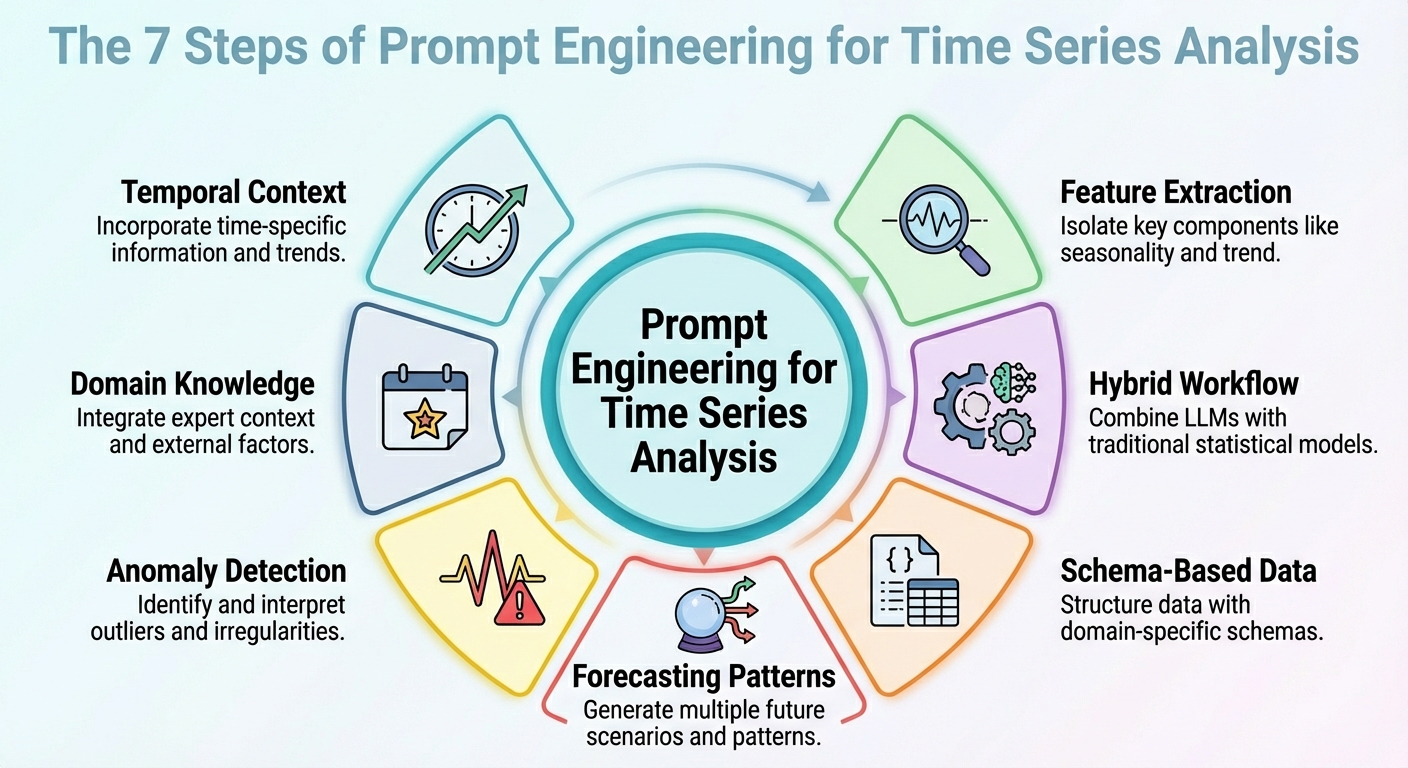
What’s Happening , because something genuinely unexpected is shaking up the world of data analysis. Those massive AI models, known as Large Language Models (LLMs), which usually spend their time writing essays or coding, are now being put to work on something completely different: time series data. Yes, you heard that right – the same tech that generates text can now help predict stock prices or analyze sensor readings. This surprising shift involves a technique called ‘prompt engineering,’ where specific instructions guide the LLM to understand and process numerical sequences over time. It’s like teaching a brilliant linguist to read and interpret a financial graph, extracting insights that were once the exclusive domain of specialized data scientists. This opens up entirely new avenues for how we interact with and understand complex datasets. ## Why This Matters This isn’t just a niche technical advancement; it’s a potential game-changer for businesses and researchers across countless industries. Imagine a world where extracting meaningful patterns from vast streams of sensor data or market trends no longer requires a team of highly specialized, expensive experts. LLMs could democratize advanced analytics, making sophisticated tools accessible to a much broader audience. The implications for speed and efficiency are equally profound. Instead of lengthy model development cycles, prompt engineering could allow for rapid experimentation and iteration on time series analysis tasks. This means faster insights, quicker decision-making, and a significant competitive edge for organizations agile enough to adopt these new methods. It’s about getting answers in minutes, not months. Furthermore, these models bring a unique perspective. While traditional algorithms focus purely on statistical relationships, LLMs might be able to integrate contextual understanding from vast amounts of text data alongside numerical patterns. This hybrid approach could uncover subtle correlations or anomalies that purely quantitative models might miss, leading to more strong and nuanced predictions. Here’s why this development is a big deal:
- Democratization of Data Science: Complex time series analysis could become accessible to non-experts through conversational prompts.
- Accelerated Insights: Businesses can derive actionable intelligence from dynamic data much faster, improving responsiveness.
- Enhanced Predictive Power: Combining linguistic understanding with numerical patterns could lead to more accurate and context-aware forecasts. ## The Bottom Line This unexpected leap for LLMs into time series analysis marks a significant evolution in artificial intelligence, blurring the lines between text and numerical data processing. We’re witnessing the early days of a future where AI’s analytical capabilities are far more versatile and pervasive than previously imagined. Are we on the cusp of a new era where every business analyst has a powerful, AI-driven data scientist at their fingertips?
Daily briefing
Get the next useful briefing
If this story was worth your time, the next one should be too. Get the daily briefing in one clean email.
Reader reaction